Let’s cover the subject of screenwriting by Aristotle’s Poetics and by Syd Field’s Screenplay. According to Aristotle, tragedy is something that has a beginning, middle and end. In his book, Syd Field divides the film into three acts, the beginning, the confrontation and the resolution. The acts are separated by turning points. Although Syd Field did not originally develop the idea of three acts, the popularity of his book has made that structure the most frequently used.
Playwrights and screenwriters before Aristotle’s Poetics and Syd Field’s Screenplay have managed to work successfully without these doctrines. Their methods have been more about the realization of their own thoughts than following a specific model and connecting the dots.
In his study Aspects of the Novel, EM Foster describes the story’s existence as follows: It has only one achievement: to make the audience want to know what happens next. And vice versa, one flaw: not making the audience want to know what’s going on next. Theatre critic and theorist William Archer wrote in his book Playmaking that the only a true definition of drama is any fictional character that is adequate interesting enough to interest the average theatre audience. Kristin Thompson has said that filmmaking techniques such as continuity, staging and lighting have evolved to create beautiful images, but more importantly to direct the viewer’s attention to significant narrative elements from moment to moment. As can be interpreted from the statements mentioned above, successful films and plays have succeeded in raising the question in the reader or viewer, what will happen next? If the script doesn’t succeed in that, it will never be finished. When the writer understands the basic function of the script, i.e. to maintain the audience interest in what happens next, he can do whatever he wants. So how do the scripts work and arouse interest in the viewer?
Telegraphing
Telegraphing, pointing or advertising means telling the viewer about things that will happen in the future. It can be verbal or visual, such as a character saying that “meet you at the cafe at five” or a character preparing a motorcycle for a ride. Both tell which direction the story is going and both solve the challenge of film narration – in the picture we only see a small part of the action. When someone tells about meeting in a coffee shop, we can cut straight to the cafe without confusing the viewer. The technique can also be used for falsehood for telegraphing (false telegraphing). First we say something is happening, but something else is happening.
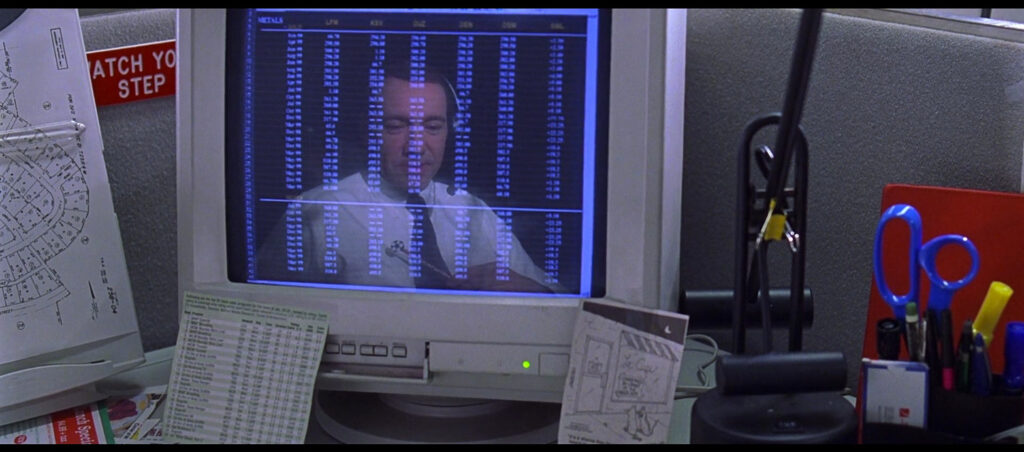
There is a surprise twist in the plot. A surprising twist only works if the audience is expecting something. This is why the surprise twist in the opening shot of the film does not work. Telegraphing can also be used in the form of a deadline, when it is said that the character has a certain amount of time to do something. Here the character comes under temporal pressure which tightens the emotional bond experienced by the audience. In the movie American Beauty main character Lester Burnham mentions right during the opening credits in the voice over, that in a year he will be dead. Much later, Lester reminds, “in a week I will be dead” and “today is the last day of my life”. These snippets of dialogue are essential in that film to keep the audience interested in the future.
Dangling cause
This tool is carrying a heavier emotional load than telegraphing. in the 1920s The narrative method prevalent in Hollywood films was built on cause and effect. Dangling cause means a reason that remains in the viewer’s mind while something else happens. A dangling cause is an expression of purpose, warning, threat, prediction, hope or fear that raises a question in the audience to which it does not immediately receive an answer. By waking up curiosity, it pushes the audience’s interest towards the future. As an example, let’s use the movie One Flew Over The Cuckoo’s Nest, where McMurphy threatens to push a pill into Nurse Ratched ass. The term dialogue hook is used for such a dangling cause and it provides a transition to the next scene where McMurphy is seen in a chair opposite Nurse Ratched. The question arises for the viewer, how will he succeed in what he has said he will do?
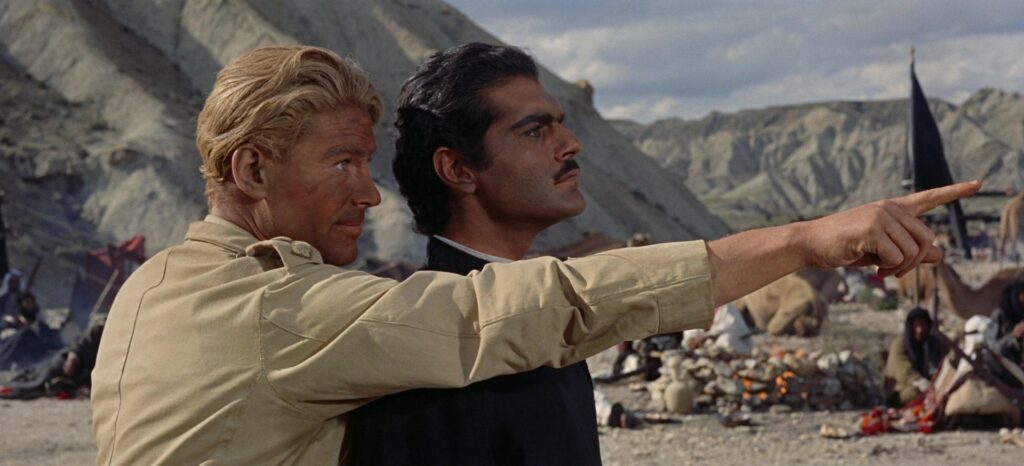
Usually, the consequences of a dangling cause do not materialize immediately after it is set, but the consequences can happen later and also several times. Let’s use the film Lawrence of Arabia as an example, where Dryden warns Lawrence about the heat of the desert and says it is only fit for gods and Bedouins. During Lawrence’s experiences, this dangling cause is returned to several times.
Dramatic irony
Also known as omniscient narration, it is a tool that is often undervalued by beginners among writers because they think the characters need to know everything at the same time as the audience. Dramatic irony occurs when the audience knows more than most of the characters in the film. It makes the audience wonder what will happen when the truth comes out. This expectation is called ironic tension and is built with a revealing scene where the audience gets to know something that the character doesn’t know and from identification, in which case the character gets to know what the audience already knows. Then the ironic tension is triggered. Dramatic irony can be exciting, which feeds the audience’s fear or comical, where a misunderstanding gets laughs. Skilled storytellers construct different levels of knowledge through the use of dramatic irony, not only between the characters and the audience, but also between different characters. Dramatic irony is a more powerful tool than telegraphing or dangling cause. It can feed an entire feature film by itself, but more comically than suspensefully.
Dramatic tension
Of the four major tools, this is the most powerful and most frequently used to maintain audience interest for thousands of years, and its use is covered in most screenwriting manuals. Frank Daniel describes dramatic tension like this: Someone wants something badly and he has it trouble getting it. Daniel actually described two types of stories, which are different versions of the same thing: Someone wants something badly and has trouble getting it, or someone tries very hard to escape something and has trouble doing so. Exactly three acts is the right amount in terms of articulating and realizing the dramatic tension because the character wants something and it raises the question, does the character achieve what he wants or not? The question is a central dramatic question and the question contains three parts, the setting of the question, its reflection and the answer to the question. The question does not need more parts and is not a whole with less. So the first act asks the question: will the main character succeed in achieving what he wants? The second act shows how the main character works through difficulties towards his goal and the third act tells the answer. Dramatic tension therefore directs the audience’s interest towards the future and the answer to the dramatic question.
Understanding the dramatic tension in the three parts is important because the three-act structure works in the smaller parts of the script, the sequences and scenes. The character wants something, tension when there are challenges in front of the goal and a solution that leads to yet another tension. Every time dramatic tension is used in a film, the all three parts must be used.
The tension must be built, that is, the question must be asked. The tension must be presented, that is, the question must be considered. The tension is released, that is, the answer to the question is given.
When you understand the dramatic tension as three parts, it’s easy to understand what makes the film feel like a whole. The central dramatic question is the most important tool when you want the audience’s interest. It creates a tension that carries through the entire film and that makes the film feel like one entity, produces a natural bond and what we describe when we tell what the film is about. As in the movie Saving Private Ryan “A man is assigned to lead a group of soldiers behind enemy lines to find an American soldier and bring him back alive.” In successful films the first act is 25% of the film, the second act 50% in the middle of the film and the third act again 25%. He also mentions that central the tension is not resolved at the end of the film, but mostly at the end of the second act.
In the third act, a new dramatic tension arises by itself. As well as dangling causes, the dramatic tension also plays with the audience’s curiosity. Dramatic tension is required however, an emotional bond between the audience and the main character to make it work. In the first act the task is to introduce the characters and create an emotional bond between the audience and the main character. When there is an emotional bond created, the audience has an emotional stake that is stronger than mere curiosity and sustains the audience’s engagement throughout the film.
I used the book Paul Gulino: Screenwriting: The Sequence Approach as a source for this text.