A character in a film is not a human being, it is a work of art. We want the audience relate to the characters as they were real, so they need to be clear and understandable by design. As Robert McKee writes on his book Story, character design combines two primary aspects, Characterisation and True Character. Characterisation is all the observable qualities: physical appearance, age, sexuality, personality, attitudes, style of speech, etc. True Character is what is behind the surface: Who is this person? Loyal or disloyal? Honest or a liar? Generous or selfish?
In this post I am focusing on characterisation and how to introduce the character in a screenplay. The purpose of the character introduction in a screenplay is to give the reader an unequivocal image of the character. It should give the director and actor a clear sense of what the writer has meant when describing the character. This comes down to the art of screenwriting; choosing the right words and make it specific.
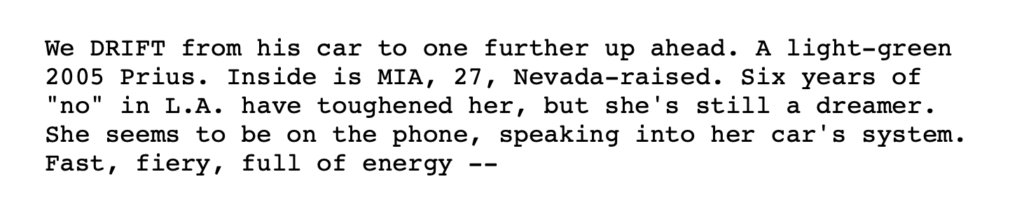
There are few points how to ensure your character description is doing its job. One good advice I picked up from the On the Page podcast episode, Never Judge a Character, was not to write a physical description. So instead of writing she wears a flowy kaftan, you could write she is a kind of person who sets up an altar of crystals and tarot cards when she travels to a new place. Don’t just put a costume on and assume everyone understands what the costume means. Especially when writing a treatment or synopsis, thinking about the essence of the character and seeding an image of the character, helps the reader to imagine and recognise different characters from the text.

It is helpful to know the person and find humanity in the description:
- Who this person is?
- How to make them as human as possible?
- What makes them a complete person?
- What they carry with them?
- How they fidget?
Sometimes the character is not a nice person. That could be the case when writing the antagonist or sometimes even the protagonist. The writer should never judge the character. Instead of judging, the writer should think why the character behaves like that and see the person in the character. It’s not possible to have a rich and diverse protagonist, if the antagonist is thin and one-sided.
Try to find things that lights that person up in the someones mind. When writing the character introduction you should focus on the character details, characterisation, instead of the action choices. The choices the character makes, form the true character and that will happen as the story goes forward. I will write more about character design and true character in a future blog post.